What is OpenArt: features, pricing, free plan and alternatives
OpenArt is an AI platform for images, video, characters and audio, with Director for chat-driven video and a team plan with a shared credit pool. What it does, who it is for, what it costs and where it falls short.

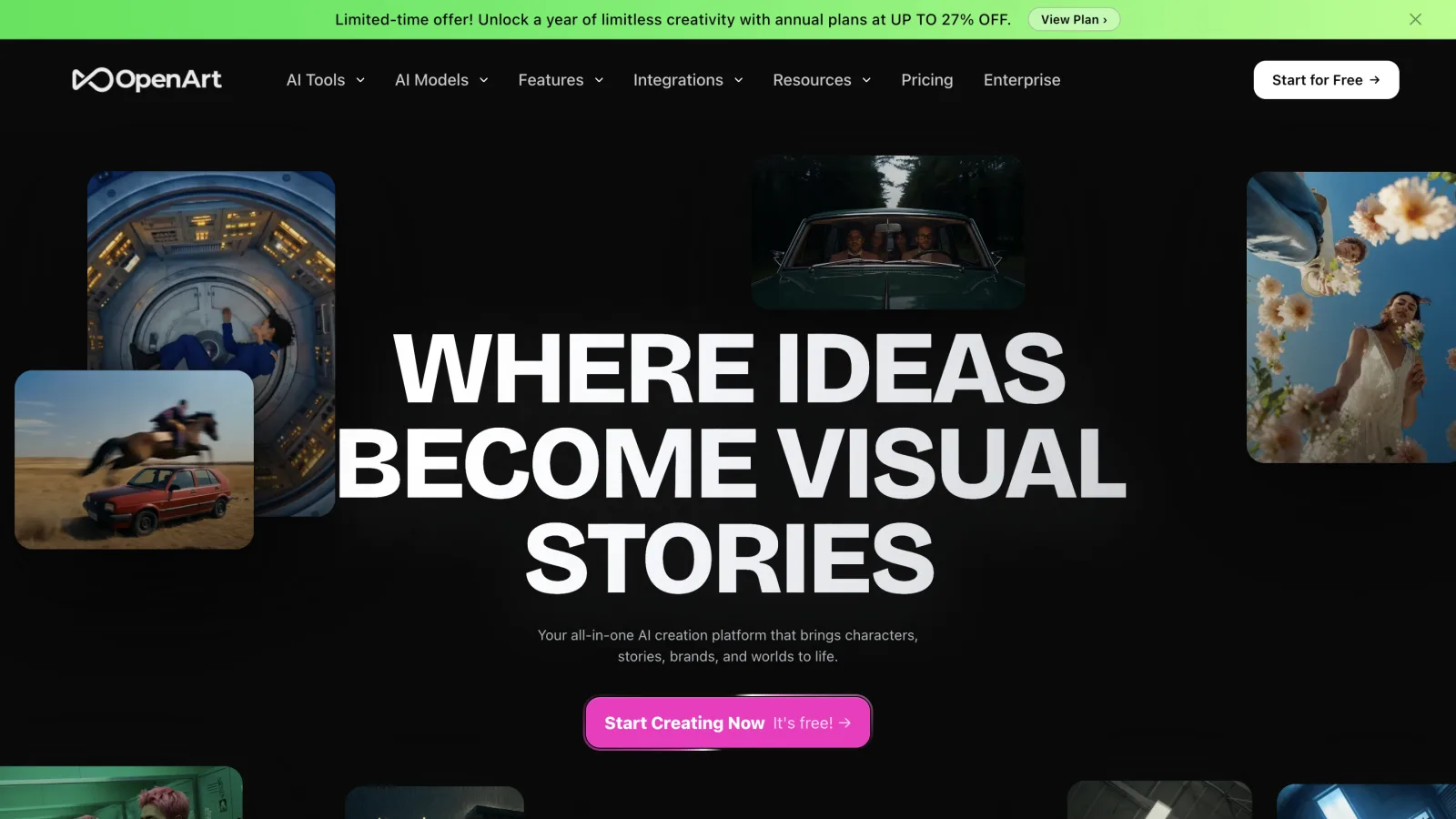
OpenArt is an "all-in-one AI creation platform that brings characters, stories, brands, and worlds to life". It started as a platform for AI art, founded in San Francisco by ex-Googlers, per its about page, and now covers image, video, voice and music, with models from Google, OpenAI, ByteDance, Kuaishou, MiniMax and xAI. The homepage says 10 million creators, brands and studios use it.
This guide covers what OpenArt does, who it is for, what it costs and where it falls short. Everything comes from OpenArt's own pages. We make Endless, a competing workspace, so read the alternatives section with that in mind.
One change to know first
OpenArt is moving everyone to a new version of the product. Its transition FAQ says the previous version retires on November 16, 2026. Accounts, subscriptions, credits and media carry over. Stories and custom models do not. They can be downloaded until December 31, 2026, and OpenArt points users to Director and Character instead. If you trained custom models on OpenArt, download them before that date.
Who OpenArt is for
Creators and brands who make story-driven content: short films, music videos, UGC and product ads, explainers, micro-dramas and AI influencers. Its strongest pitch is keeping the same character across many images and videos.
Main features
- Director. You describe a video in a chat, lay out a storyboard and refine each shot with natural-language instructions.
- Video generation. Text or image to video, up to 15 seconds and 4K per the homepage, with Veo 3.1, Seedance 2.0, Kling 3.0 Omni or Sora 2.
- Image generation and editing. GPT Image 2, Nano Banana Pro or Seedream 5.0, then erase, expand, swap backgrounds, restyle or upscale to 4K on the same canvas.
- Characters. Build a character from reference images or a brief, save it to your library and tag it in later generations.
- Worlds. Generate a navigable 3D environment from a prompt, place characters in it and take stills.
- Audio. Voiceovers in 30+ languages with lip-sync, music, sound effects and voice cloning.
- Studio tools. Smart Shot (one prompt into 3 to 5 cuts), Motion Sync, camera angle control, background replacement, video relighting and video inpainting.
- An Adobe After Effects integration and a CLI.
Models
The homepage and the MCP page list Seedance 2.0 and 2.5, Veo 3 and 3.1, Sora 2, Kling 3.0, MiniMax Hailuo and H3, Wan, PixVerse, Grok Imagine and HappyHorse for video. For images they list GPT Image 2 and 2.5, Nano Banana (Pro, 2 and 2.1), Seedream 4.5 and 5.0, Ideogram 4.5 and Grok Image. The pricing page counts "100+ premium image, video, and audio models".
There are no chat models to pick for writing; Director uses chat to drive video, not to write your copy.
Pricing
Prices from the OpenArt pricing page. Individual plans are priced per seat.
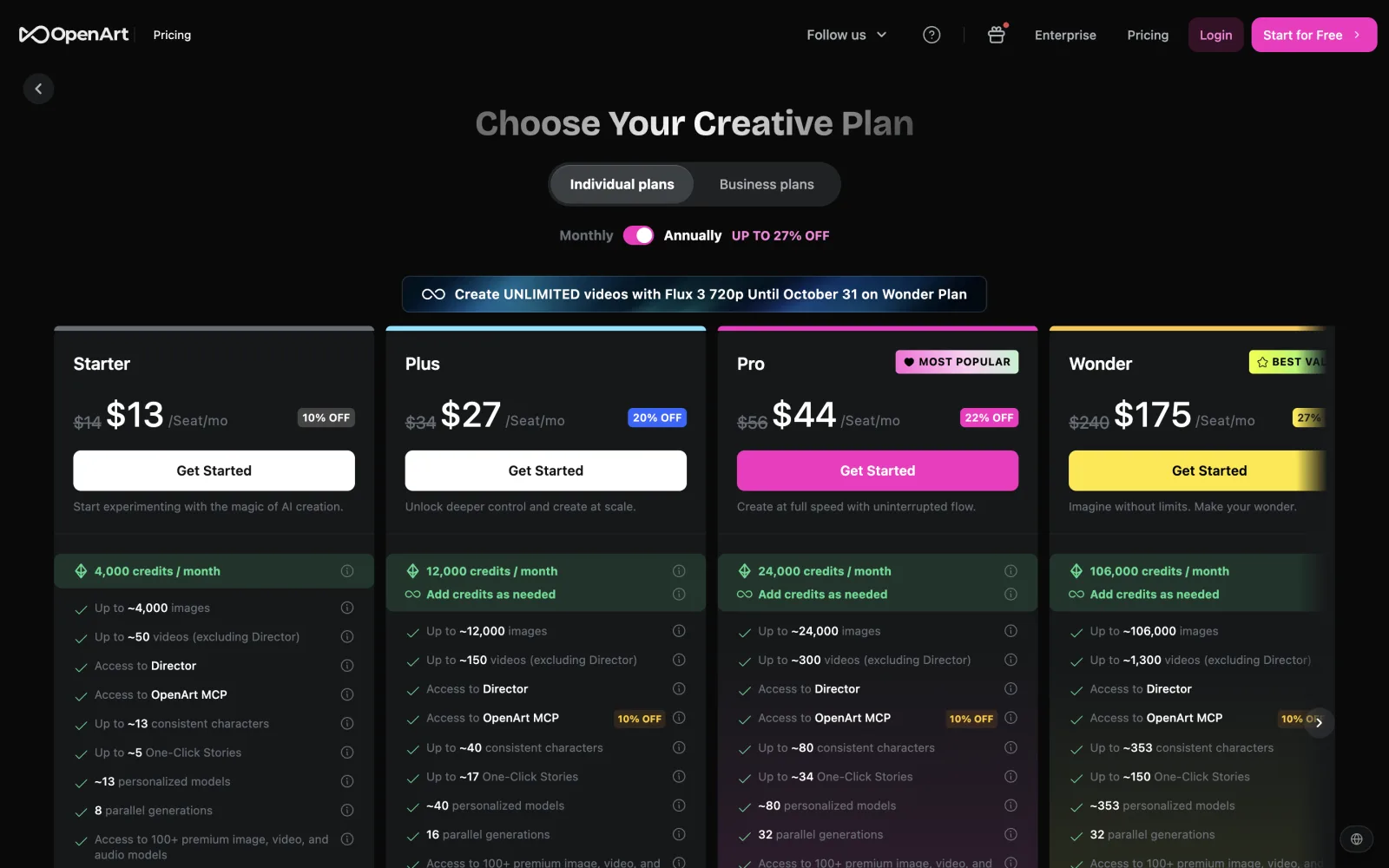
| Plan | Monthly | Billed annually | Credits per month |
|---|---|---|---|
| Starter | $14 per seat | $13 per seat | 4,000 |
| Plus | $34 per seat | $27 per seat | 12,000 |
| Pro | $56 per seat | $44 per seat | 24,000 |
| Wonder | $240 per seat | $175 per seat | 106,000 |
| Business | By credit volume | By credit volume | 50k to 1.5M |
What the page adds:
- Credit estimates. Starter's 4,000 credits equal up to about 4,000 images or about 50 videos (not counting Director), per the plan card.
- Commercial use rights appear on the Plus, Pro and Wonder cards, not on Starter. The homepage FAQ separately says "you fully own what you create".
- Every paid plan includes Director, the MCP server, consistent characters and watermark-free output. Plus and up can add credits as needed.
- The Business plan is not per seat. It covers up to 50 users with a shared credit pool, Admin, Editor and Viewer roles, credit limits, project permissions and IP safety checks on references. Its price depends on the credit tier you pick. Enterprise adds unlimited seats, SSO, credits that don't expire and IP indemnification.
Is there a free plan?
There is a free trial. The homepage FAQ says you can start "with a trial plan, with daily credits and no credit card required". Paid plans add the strongest models, longer videos and higher-quality exports.
API and MCP
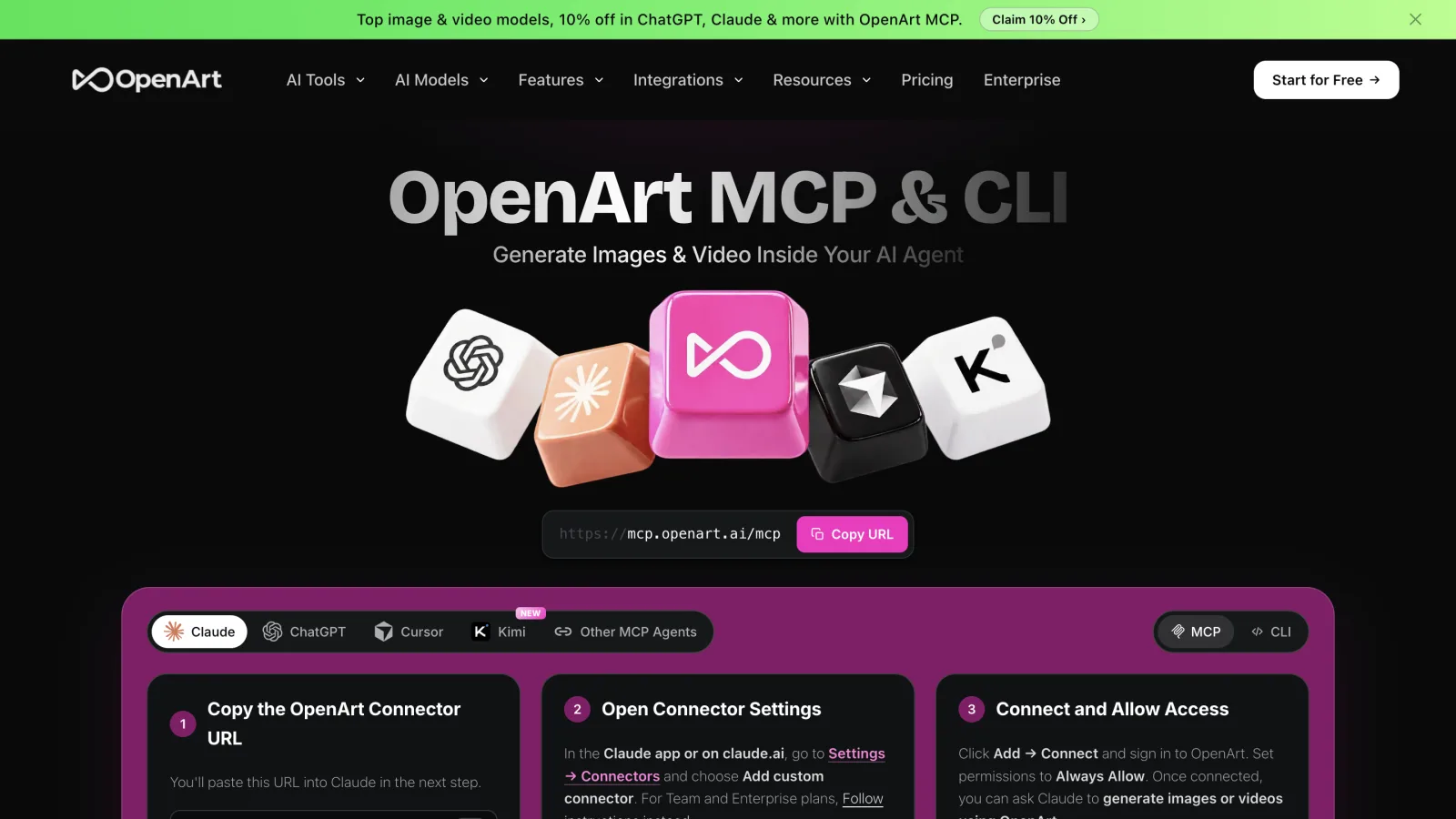
OpenArt's MCP server (https://mcp.openart.ai/mcp) works with Claude,
ChatGPT, Cursor, Kimi and other MCP clients, and there is a CLI for Claude Code
and Codex. It signs in with OAuth (no API key), spends the same credits as the
website, saves results to your library and can list and pick projects. The
pricing page showed 10% off MCP generations on Plus and up. Character and
Smart Shot are not available through MCP yet; OpenArt lists them as "on the
roadmap".
We found no public developer API page on openart.ai
(openart.ai/api returned "page not found"), so treat MCP and the CLI as the
ways to automate it.
Strengths
- Consistent characters across images and videos, which is its core strength.
- Director for multi-shot video by chat, plus audio, voice and music in the same place.
- A Business plan that pools credits across up to 50 users instead of charging per seat.
- A well-documented MCP server for Claude, ChatGPT and Cursor.
Limits
- The move to the new version retires Stories and custom models, so existing projects of that kind need exporting.
- Individual plans are priced per seat.
- Commercial use rights are listed from Plus up, not on Starter.
- No chat models to choose from and no public REST API page.
Alternatives to OpenArt
- Endless. A shared workspace where the team picks a chat, image, video or audio model for each task and everyone spends from one credit balance, with spending limits per person and per team. Projects keep a brand's voice, references and rules for every chat and generation, and the same workspace transcribes recordings and tracks social. The free plan gives 50 credits every week, team plans start at $49 a month for up to 10 members, and the MCP server works on every plan. The REST API is part of the Business plan. Where OpenArt is stronger: character consistency, Director and 3D worlds. Endless vs OpenArt, fact by fact
- Higgsfield. Video first, with cinematic presets, Cinema Studio and Soul ID for a consistent character. What is Higgsfield
- Krea. Hands-on image work, real-time generation, upscaling and LoRA training. What is Krea
- Pollo AI. A video-heavy suite with an agent, Marketing Studio and its own Pollo models. What is Pollo AI
For a wider view, see the best platforms to use every AI model in one place.
FAQ
What is OpenArt AI used for?
Making images and videos with consistent characters: short films, music videos, ads, explainers and AI influencers, plus voiceovers and music.
How much does OpenArt cost?
Starter is $14 per seat a month, Plus $34, Pro $56 and Wonder $240, less when paid annually. Check the pricing page for today's numbers.
Is OpenArt free?
There is a free trial with daily credits and no credit card. Paid plans add the strongest models and longer videos.
What happens to OpenArt on November 16, 2026?
The previous version of OpenArt retires. Your account, credits and media move to the new version; Stories and custom models don't, and can be downloaded until December 31, 2026.
Does OpenArt work with Claude or ChatGPT?
Yes. Its MCP server connects Claude, ChatGPT, Cursor and Kimi, and spends your OpenArt credits.
Keep reading
What is Higgsfield: features, pricing, free plan and alternatives
Higgsfield is a video-first AI studio with cinematic presets, its own Soul image models and dozens of third-party video models. What it does, who it is for, what it costs and where it falls short.
The best ChatGPT alternatives in 2026 for teams that want more models
Claude, Gemini, Poe, Magai, TypingMind, OpenRouter and Endless: which ones give you models from more than one company, how they bill a team, and where ChatGPT is still the better choice.
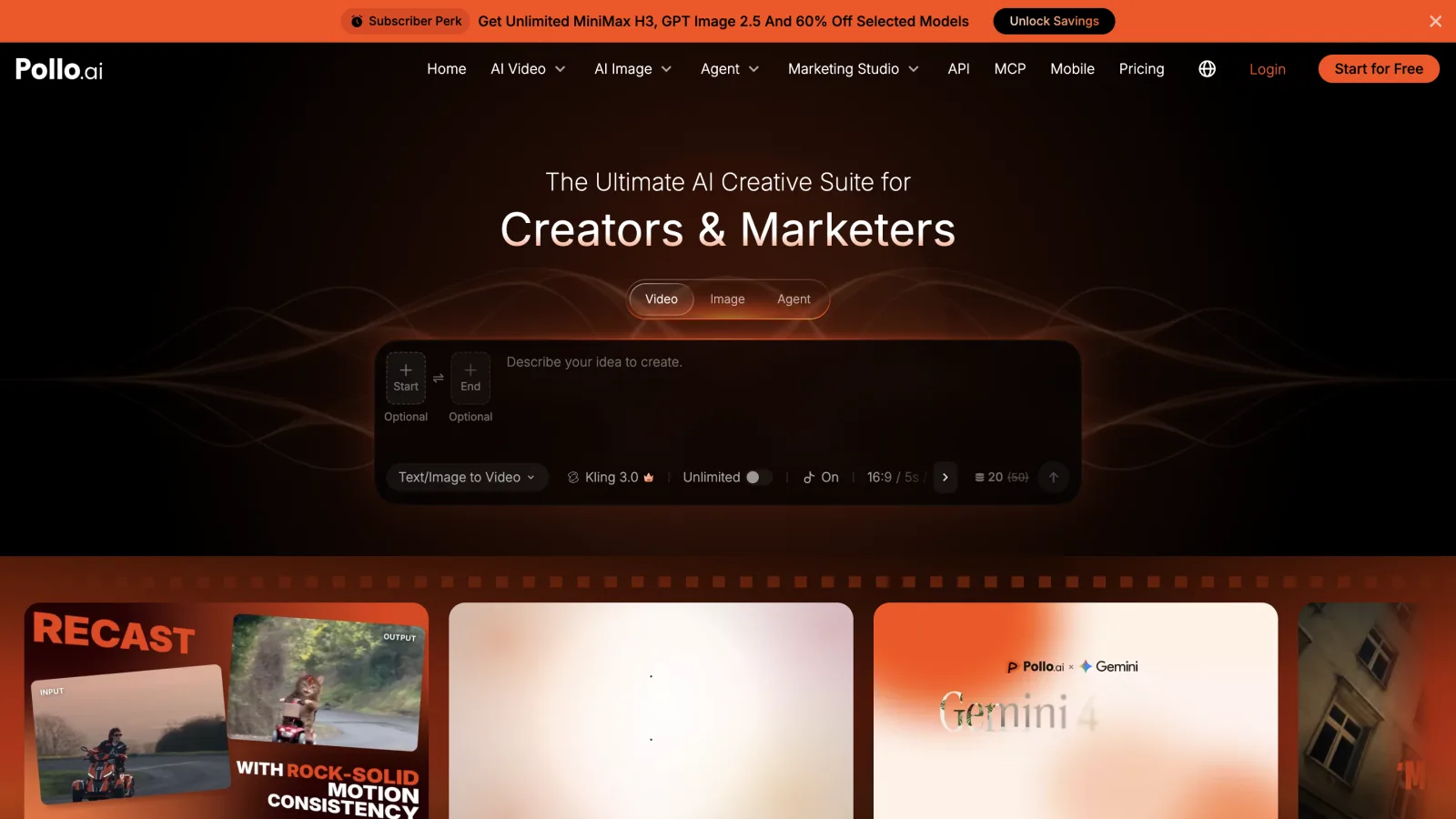
What is Pollo AI: features, pricing, free plan and alternatives
Pollo AI is a video-first creative suite with an agent, a Marketing Studio for ads, its own Pollo models and a long list of third-party ones. What it does, who it is for, what it costs and where it falls short.
Bring this to your team
Start creating with Endless: chat, image, video, transcripts, and social insight in one workspace.
Start free